Back in the UK for a while now and finally an blog update on the project. As already mentioned during my stay in Napoli the project made a U-turn with my friends decision not to take part in the project. Change is the nature of all things and flexibility is required in the process of producing a work - it was a tricky moment though and at first I was a bit in despair but had to accept the situation…
I initially had in mind to create three parallel stories, so I was still left with the two other ones which were worth following: the documentation of the street and the peoples homes. I had one text and a few books with me – Walter Benjamin’s essay on Naples and Gaston Bachelard “The Poetic of Space”, which were two “root” references for the project. I also started reading into Situationist notion of Psychogeography (I had this useful book http://www.amazon.co.uk/Psychogeography-Pocket-Essentials-Merlin-Coverley/dp/1904048617 ) and it became hugely beneficial in regard to how I wanted to approach the photo shoot for the street.
Based on Benjamin’s description of the city and its Architecture as “porous” and the inspiration I could draw from Bachelard’s writing on Space and the Situationists Psychogeography (and the everyday) I decided, that the focus of the entire project will be more on the space (the public and intimate) and the whole project will be almost devoid of people. All of sudden the negotiation with people was absent and the photographs were ethically less charged (not sure if they are fully un-charged) and this was indeed very new and liberating!
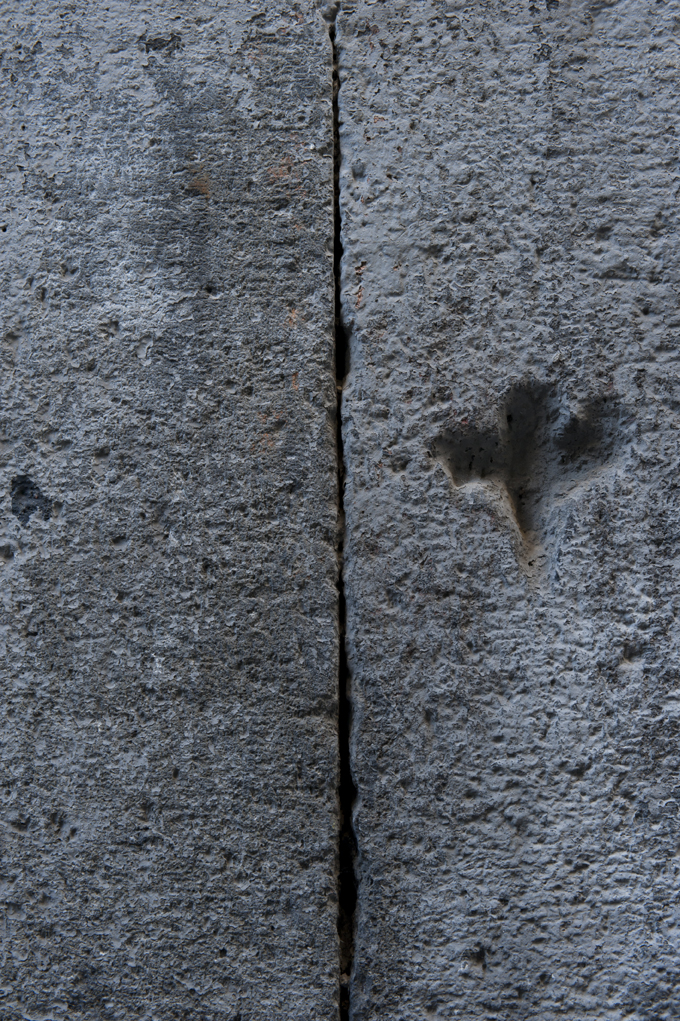
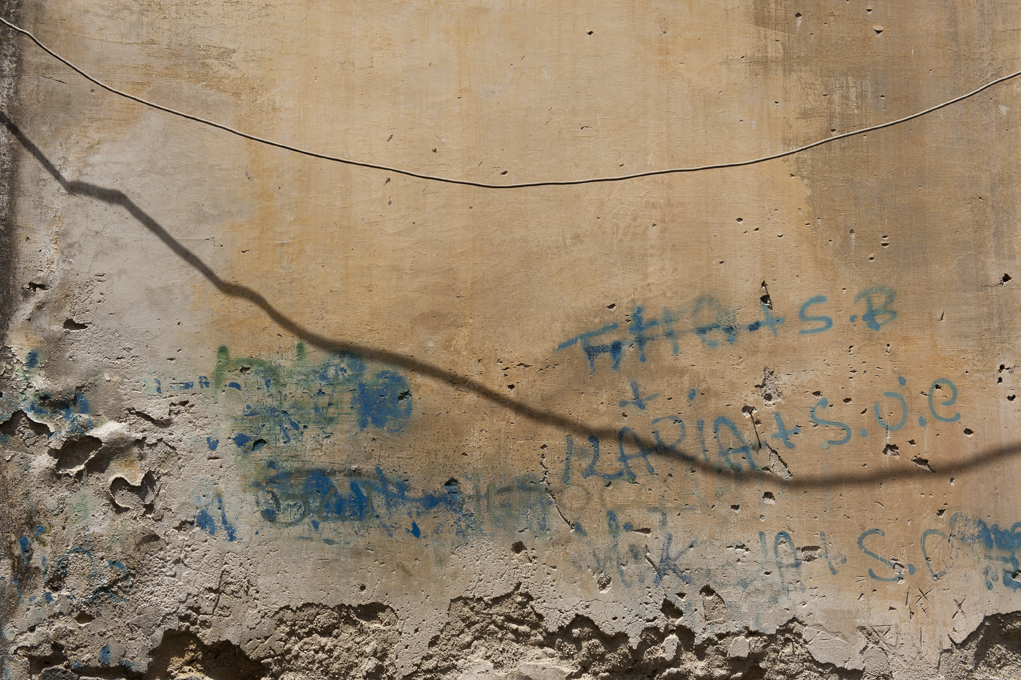
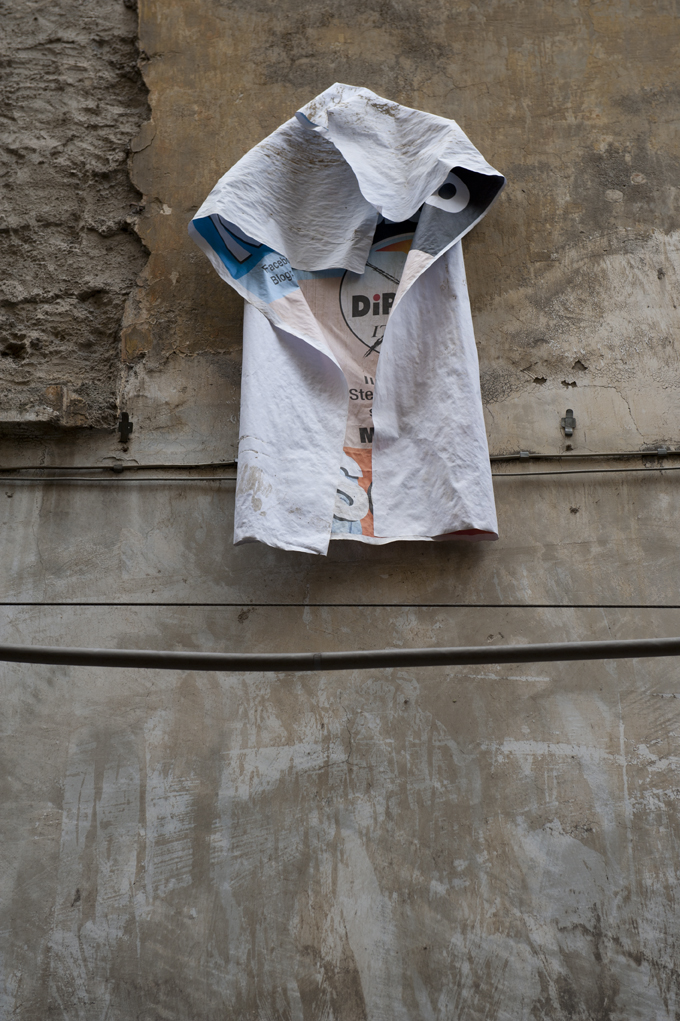
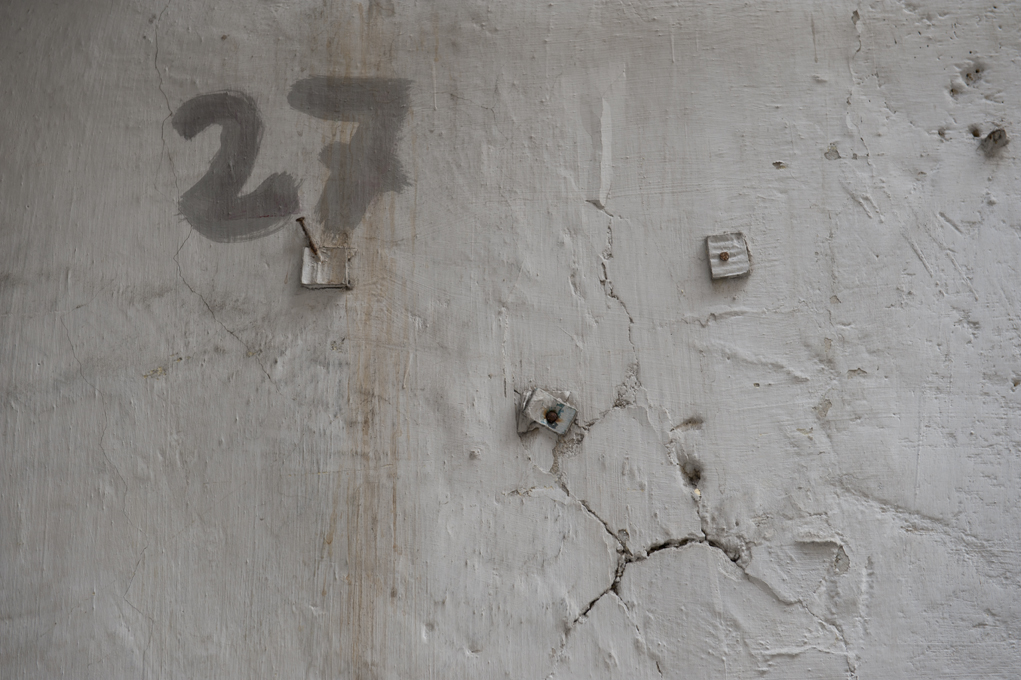
I started wandering the street with a different motivation so my gaze was was adjusting swiftly and in the course of a few days a visual strategy became clear to me. It’s the peoples interactions with their surrounding that became more and more the focus so I embarked on a journey to discover the hidden details (but yet obvious) of a defined urban area or street in this case. Even though the radius was so narrow, the expansion of the space was radical in a way, walking along Via Miracoli and looking at or into (almost) every little corner, crack or nail on the wall, etc. The reactions of the people were accordingly curious and funny, by now they knew who I was and what I was doing, but the fact that I was making photos of nail in a wall was not “normal” in their view… One might argue, rightly so.. Hence the photos became abstract, portraits of cracks, plastic tubes, pencil writing and wires creating ornaments on a wall… all this became increasingly interesting. Peter Fraser’s book EVERYDAY ICONS is a great source of inspiration in that regard and reassured me that I am not (entirely) on the wrong track..! I had regular up and downs regarding the content of the photos and was concerned of what the response of my tutors will be…
What is it, with the everyday, that surrounds us, which we ban from our perception? What happens with that sudden attention to those small details and the long forgotten? What are the stories behind those love messages on the walls? Ti amo Ilenia - who is this woman…? Many more of, sometimes un-readable, messages are “eternalised” temporarily on wood work, stones, walls and doors…